Bingo Showdown - Classic Bingo
- 4.6
- Rating
- 5.00M
- Installs
- Free
- Price
 Analysis by App-foxy
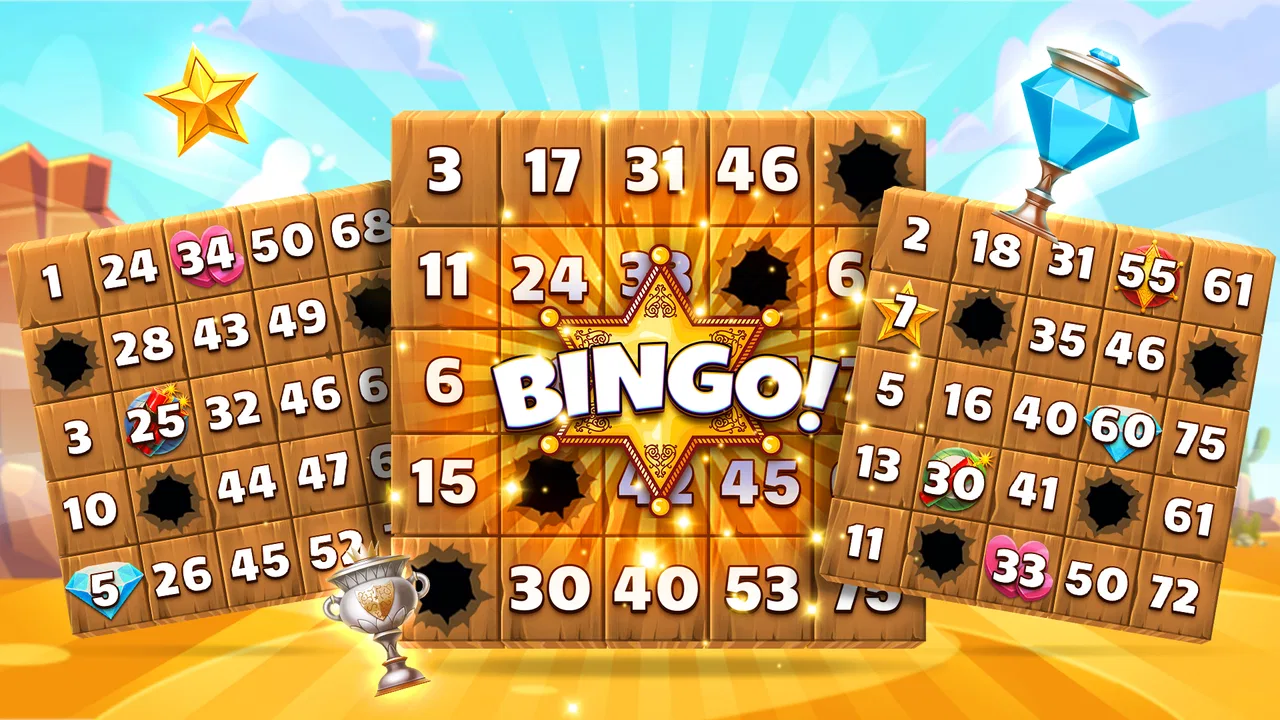
I spent time with Bingo Showdown - Classic Bingo as a casual board game, paying particular attention to how its free-to-play structure affects the ordinary bingo experience. My first impression was that it is easy to pick up: the cards are familiar, the objective is obvious, and the presentation is built around a lively bingo-room atmosphere rather than a complicated ruleset. That makes it approachable for someone who wants a quick game without learning a large set of systems first.
What makes this version different from a basic offline bingo app is its social framing. It is designed around multiplayer games and tournaments, so the appeal is not only marking numbers but also feeling part of a larger event. I found that mix enjoyable when I wanted something light and repetitive, although it also means the game is better suited to players who accept a connected, progression-focused experience than to people looking for a completely quiet substitute for paper bingo.
How the free-to-play setup shapes the experience
The game is free to download, which removes the biggest barrier to trying it. It is published by SciPlay, also shown as Spicerack, and belongs to the board-game category. Its broad audience is reflected in an Everyone content rating, while the Android requirement begins at version 6.0. In practical terms, that makes it accessible to many older devices as well as newer phones, though performance can still depend on the individual handset and its available storage.
You May Also Like

 Blood Strike: 2.5 Anniversary
Blood Strike’s Loadouts Turn Every Drop Into a Tactical Gamble
A close look at Blood Strike’s custom loadouts: how fast access to signature weapons reshapes its battle royale rhythm, rewards preparation, and narrows the gap between fights.

 Pandora - Music & Podcasts
Pandora’s Music Is Easy to Start, but Harder to Recover
Pandora’s strength is its low-effort path from a seed to a station. Its weak spot is how much confidence it asks you to place in connection, setup, and quiet recovery.

 8 Ball Pool
 Is Built on Rivalries, Rematches, and Routine
A close look at the rivalries, rematches, shared routines, and unanswered safety questions that turn a quick pool match into a persistent mobile community.

 Samsung Music
’s Quiet Strength Is Playing What You Already Own
Its reach comes less from spectacle than from dependable access to a personal library. That simplicity is both the app’s strongest retention engine and its ceiling.

 AccuWeather: Weather Radar
AccuWeather Review: A Quick, Clear Forecast for Everyday Decisions
For everyday plans, the best forecast is the one you can understand quickly. AccuWeather makes rain timing, radar, and local conditions easy to act on, with a few trade-offs.

 Hill Climb Racing
Why Hill Climb Racing Still Turns Crashes Into One More Run
A tiny car, a bumpy hill and one more upgrade: Hill Climb Racing keeps resurfacing because its simple chaos makes every near-miss feel personal.
More From Our News Desk



The important spending detail is that the game includes optional purchases ranging from $0.49 to $249.99 per item. That is a very wide range, so I would not describe the experience as simply “free” without qualification. You can begin without paying, but the presence of high-priced individual items is something I would want a new player to understand before handing the device to a child or allowing purchases on a shared account.
I recommend treating the free opening as a trial rather than assuming that every later convenience will remain equally comfortable without spending. That does not automatically make the game unfair, and I did not find a reason to claim that payment is required to participate. It does mean that players should decide in advance whether they are comfortable with optional purchases, especially if they are the type who keeps playing after a near-win or wants to maintain momentum during a tournament.
A useful habit is to play several sessions while deliberately ignoring the purchase prompts. This gives you a clearer sense of whether the core number-marking loop is enjoyable on its own. If the game still feels satisfying when you are not trying to accelerate anything, it is more likely to work as a casual pastime. If the experience only feels rewarding when you are considering a purchase, that is a good personal signal to stop.
The basic loop is familiar, but the surrounding structure matters
At the center is classic bingo: numbers are called, cards are checked, and completing the required pattern is the goal. That familiarity is the reason the game is immediately understandable. I did not need a tutorial-heavy introduction to know what to do, and a person who has played bingo socially should feel comfortable very quickly.
The surrounding presentation gives each session more energy than a plain digital card. Multiplayer play and tournaments create a sense that the current round belongs to a larger activity. That can be motivating when I have only a few minutes and want a defined challenge, but it can also make the game feel more demanding than a simple offline board. A relaxed player may enjoy the atmosphere; someone who wants to pause freely and return later may prefer a less event-oriented alternative.
One of the more practical strengths is that the game works well in short bursts. I can imagine using it during a coffee break, while waiting for an appointment, or in the evening when I want a low-effort activity rather than a full strategy game. The trade-off is repetition. Bingo naturally relies on repeated rounds, and the extra competitive framing does not change that fundamental rhythm. If you need deep decision-making every minute, this is unlikely to hold your attention for long.
Progress can add motivation and pressure at the same time
The tournament angle changes how I approach a round. In ordinary bingo, completing a card can be enough. Here, the wider competitive context encourages me to think about consistency and participation rather than treating each game as an isolated result. That creates a stronger reason to return, but it also introduces pressure that is absent from a paper card played casually with friends.
My advice is to separate entertainment goals from progress goals. If I play only to advance, a losing round feels like wasted time. If I play for the short-term rhythm of calling, checking, and completing patterns, the result matters less. This distinction is especially useful for new players because the game’s lively presentation can make every round feel more important than it really is.
There is also a subtle spending risk in competitive environments: a player may feel tempted to buy something simply to avoid falling behind. I cannot label that pressure as a specific mechanic without evidence, but the combination of tournaments and optional purchases makes self-control worthwhile. Set a personal limit before playing, and do not make a purchase immediately after a frustrating near-win. Waiting a few minutes is a simple way to distinguish genuine interest from impulse.
What fairness looks like from a player’s seat
For me, fairness in a bingo game has two separate meanings. The first is whether the number draws and outcomes feel trustworthy. The second is whether spending changes a player’s position or comfort in a meaningful way. The available purchase information confirms that optional items exist, but it does not establish exactly what each item does or whether it affects competitive outcomes. I therefore would not promise a level playing field, nor would I accuse the game of being pay-to-win.
That uncertainty is important rather than something to gloss over. A player who only wants a harmless number game may be comfortable with a free-to-play model. A player who expects tournament competition to be purely skill-based should examine the in-game purchase explanations carefully before investing time or money. Bingo already includes a large element of chance, so spending can feel especially uncomfortable if it appears to improve access, speed, or persistence without making the underlying draw more skillful.
The safest way to judge the model is to observe your own experience over multiple sessions. Can you enjoy regular rounds without buying anything? Do you understand why a purchase would help before confirming it? Does the game remain fun when a tournament result goes against you? These questions are more useful than assuming that a high rating proves perfect fairness. The game has an average rating of 4.6 from around 615 thousand ratings, which shows strong overall approval, but popularity cannot answer every individual concern about competition or spending.
I also pay attention to whether I feel informed at the moment of purchase. Before confirming anything, I would read the item description, check the displayed price, and make sure I know whether it is a one-time item or part of a repeated spending pattern. The listed range reaches $249.99 for an item, so this is not a place where I would leave purchase confirmation entirely unattended on a family device.
Who will enjoy it, and who should choose another kind of bingo
This is a good match for players who like recognizable bingo rules but want more activity around them. If you enjoy multiplayer settings, tournament goals, and a colorful game-room feeling, the added structure gives ordinary card marking more purpose. It is also suitable for someone who wants an accessible board game that can be played in short sessions rather than learned over an entire evening.
I would be more cautious recommending it to a person who wants offline simplicity, complete control over the pace, or a one-time purchase with no optional spending. A traditional paper set is better for a family gathering because everyone can talk, pause, and manage the pace together. A minimalist offline bingo app may be better for a user who wants no tournament layer and no temptation to buy extras. A deeper strategy board game is the better choice when the enjoyment comes from planning, bluffing, or making meaningful decisions rather than waiting for numbers.
It may also be a poor fit for players who dislike chance determining the outcome. Even with multiplayer and tournament framing, bingo remains bingo. You can pay attention, play regularly, and make sensible choices about your resources, but you cannot turn it into a strategy title where careful planning guarantees success. I would not recommend it as a competitive game for someone who needs every result to reflect skill alone.
Everyday use: a short evening session
Imagine finishing dinner with fifteen minutes before bed. I would open the game, play a round or two, and use that limited window as a clear stopping point. The familiar rules mean I can start immediately, while the multiplayer and tournament context gives the session a little more energy than a static solo card. If the game presents a purchase opportunity after an unlucky round, I would ignore it and decide later whether I still want to continue.
That routine highlights both the strength and the weakness. The game fills a small gap in the day effectively, but its progression-oriented design can encourage me to keep going after my planned stopping time. My practical solution is to choose the number of rounds before opening it and to stop at that point, regardless of whether the last card was close to completion. This keeps the game in the role of a short diversion instead of allowing the competitive atmosphere to control the evening.
Useful habits for playing without losing control
First, I would learn the game’s free rhythm before buying anything. A player should know whether the basic rounds are enjoyable independently of tournament ambitions. This is the most reliable way to avoid paying for a feeling the core game does not provide.
Second, I would treat every purchase as a separate decision rather than part of a chain. The available item prices span from small impulse amounts to a very large single-item price, so a budget that sounds reasonable in theory can disappear through repeated small confirmations. Device-level purchase protections are particularly sensible when children or guests can access the account.
Third, I would avoid judging the game after one unlucky session. Bingo outcomes can vary naturally, and frustration makes spending feel more attractive. Playing at a calm time, with no need to “recover” a result, gives a fairer impression of whether the multiplayer and tournament elements are genuinely fun.
Fourth, I would compare the game with the experience I actually want, not just with other mobile bingo titles. If I want conversation, paper bingo wins. If I want quiet and no commercial pressure, a basic offline option wins. If I want a social, event-like version that is easy to start, this game has a clearer reason to exist.
What I would check before committing
The current version is 469.0.2, and the game has been available since December 11, 2014. That long presence and the reported 5M+ installs suggest a well-established product rather than a brand-new experiment. Still, longevity does not remove the need to check the current in-game experience after installation. Interfaces, offers, and progression details can change over time, so I would read each screen instead of relying on an old impression or a friend’s description.
I would also check how comfortable the game feels on my particular phone. The minimum Android requirement is 6.0, but meeting a minimum does not guarantee the same smoothness on every device. If the screen feels crowded or the game takes too much attention for a quick session, that is a personal usability issue worth taking seriously. Bingo should be relaxing; if the presentation makes it tiring to follow, a simpler alternative may serve better.
Another question is whether the social layer is genuinely valuable to you. Multiplayer and tournaments are central to the game’s identity, but not everyone wants a shared competitive atmosphere around a chance-based board game. If you would rather play alone at your own pace, you may appreciate the familiar rules while finding the surrounding structure unnecessary.
My trust verdict on the spending model
I see this as a free-to-start bingo game with a strong social and tournament personality, not as a pure replacement for a physical bingo set. Its accessibility is a real advantage: the rules are recognizable, the age rating is Everyone, and the Android compatibility reaches version 6.0 and later. The large player base and 4.6 average also indicate that many people find the overall package enjoyable.
My reservation is not that optional purchases exist; that is clear. My reservation is that the purchase range is broad enough that players need to stay attentive, while the exact effect of every item should be understood inside the game before spending. I would happily recommend trying it for free, but I would not recommend buying automatically just because a tournament result was disappointing.
My bottom line: try the free experience, set a spending boundary, and judge it by the fun of its regular bingo rounds rather than by the promise of faster progress. For a player who wants lively multiplayer bingo in short sessions, it is an appealing choice. For someone seeking offline calm, guaranteed skill-based competition, or a completely purchase-free environment, another board-game option will be the better fit.
After that trial, the decision is fairly simple. Keep it if the calls, cards, and social atmosphere are enjoyable without pressure. Skip it if the tournament structure distracts from the basic game or if the purchase prompts make the experience feel less comfortable than ordinary bingo. That honest test tells me more than the store summary alone, and it is the approach I would suggest to a friend.
FAQs for Bingo Showdown - Classic Bingo
01What is the main objective of Bingo Showdown - Classic Bingo?
Bingo Showdown - Classic Bingo combines the classic game of bingo with a Western-themed twist. The main objective is to complete bingo patterns on your card before your opponents. Players can compete in various tournaments, earn rewards, and unlock new levels, all while enjoying a unique Wild West atmosphere.
02Is Bingo Showdown - Classic Bingo free to play?
Yes, Bingo Showdown - Classic Bingo is free to download and play. However, it does offer in-app purchases for players who want to enhance their gaming experience. These purchases can include additional tickets, power-ups, and other bonuses to help progress more quickly through the game.
03What features make Bingo Showdown - Classic Bingo stand out?
Bingo Showdown - Classic Bingo stands out with its engaging Wild West theme, interactive gameplay, and competitive tournaments. Players can enjoy real-time multiplayer matches, collect unique power-ups, and participate in daily challenges. The game also includes a social feature, allowing players to connect with friends and form teams.
04Can I play Bingo Showdown - Classic Bingo offline?
Bingo Showdown - Classic Bingo requires an internet connection to fully enjoy its features. The game is designed for real-time multiplayer competition, and an active connection ensures you can participate in tournaments, access updates, and interact with other players seamlessly.
05What devices are compatible with Bingo Showdown - Classic Bingo?
Bingo Showdown - Classic Bingo is available on both Android and iOS devices. It is optimized for a wide range of smartphones and tablets, ensuring smooth gameplay across different screen sizes and operating systems. Make sure your device meets the minimum requirements for the best experience.
Pros
- Engaging graphics and sound effects.
- Multiple bingo rooms and events.
- Daily bonuses and rewards.
- User-friendly interface.
- Supports offline play.
Cons
- Ads can be intrusive.
- In-app purchases are pricey.
- Requires constant internet connection.
- Gameplay can feel repetitive.
- Limited customization options.

Bingo Showdown - Classic Bingo
Gallery